Ostia Antica by Train
Rome’s port city, silted over and saved by abandonment — Pompeii’s argument at metro fare, thirty minutes from the Colosseum’s crowds.
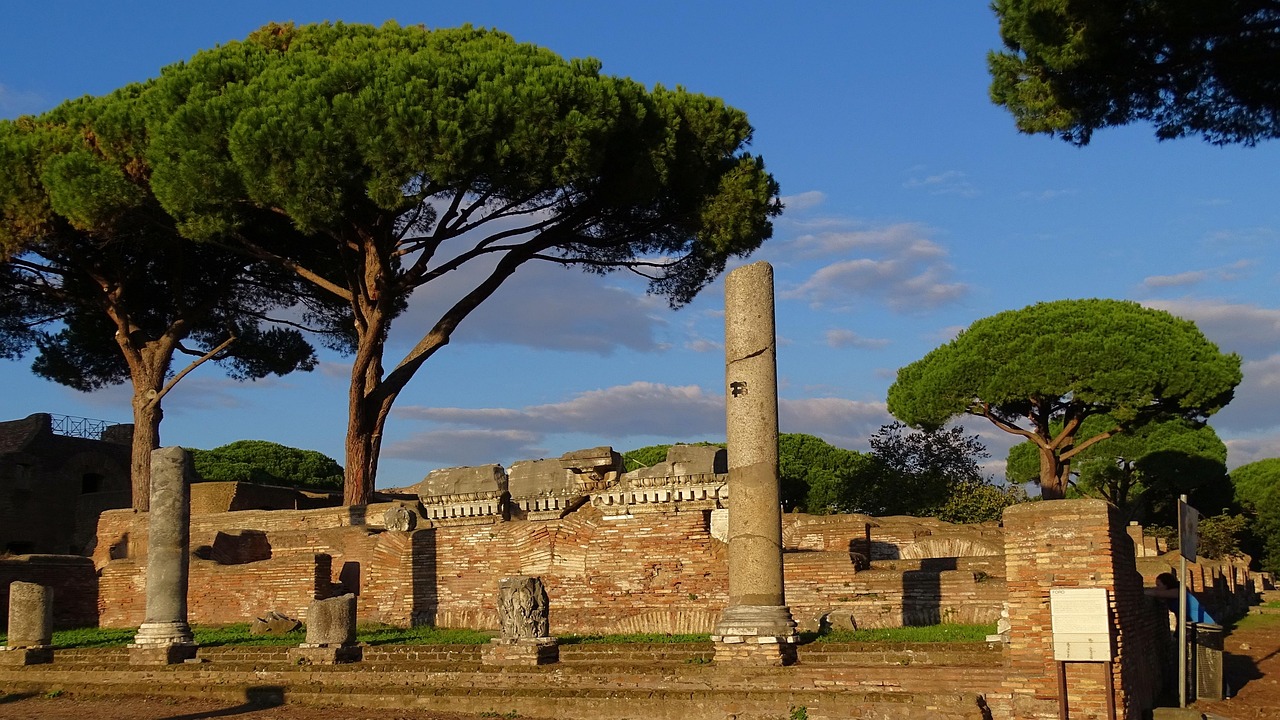
The short version
- The train leaves from Porta San Paolo beside Piramide metro every fifteen minutes or so, reaching Ostia Antica in half an hour on a standard Rome transit ticket — the cheapest great day trip in Italy.
- Entry is booked at coopculture.it; the site closes Mondays and sells calmly otherwise — no Pompeii-style caps or name-checks.
- This was Rome’s working harbor city: apartment blocks, warehouses, bars, and baths preserved to shoulder height and above, streets still paved and rutted.
- The Baths of Neptune mosaics, viewed from the raised terrace, are the site’s front-page image; the theatre behind them still stages summer performances.
- The thermopolium — a marble-countered ancient bar with its menu frescoed on the wall — makes the whole city suddenly, disarmingly familiar.
- The forum, the mill-bakeries with their lava grindstones, and the multi-story House of Diana reward the ones who keep walking past the famous first third.

Getting there
Metro to Piramide, cross to Porta San Paolo, and board the Roma–Lido line toward the sea: Ostia Antica station is 30 minutes out, and a footbridge crosses to the site gate in five more. The same transit ticket that rode you across Rome covers it — no bookings, no transfers, no drama. That ease is precisely why the empty-feeling ruins thirty minutes from the Trevi crush remain one of travel’s better bargains.
The site
Enter along the Decumanus — the main street’s basalt still grooved by cart wheels — past the necropolis and into the city proper. Take the Baths of Neptune terrace and the theatre early, then push deeper: the Piazzale delle Corporazioni’s shipping-office mosaics advertising routes and cargoes, the thermopolium’s bar, the forum, and the residential blocks where Rome’s middle class actually lived — the thing Pompeii’s villas do not show. Three hours covers the spine; five repays the wanderers. The little museum near the café collects the best sculpture found on site.
When to go
October through April is prime: soft light, workable temperatures, and crowds that never materialize. Summer is entirely a morning proposition — umbrella pines shade patches, not paths — with the sea breeze arriving as consolation by afternoon. Rain turns ancient pavements slick but empties the site completely; a bright winter Tuesday here may be the emptiest great site in Italian archaeology for the price. Mondays, per the alarm, are for other plans.
Frequently Asked Questions
Ostia or Pompeii from Rome?
Pompeii is the greater catastrophe and the greater logistics; Ostia is nearly the equal city at a tenth the effort and none of the crowd. If Naples is not otherwise in your trip, Ostia answers the ancient-city question honestly.
How long do I need?
Three focused hours for the highlights along the main street; five for the full sprawl plus museum. It pairs naturally with a free Roman afternoon rather than demanding a dawn start.
Is it good with kids?
Among the best ancient sites for them — climbable, open, and story-rich, with the theatre and the bar as reliable hits. The distances and sun are the only management tasks.
Can I combine it with the beach?
The same train line continues to modern Lido di Ostia’s beaches — a workable summer double if the ruins got your morning. Manage expectations: it is Rome’s local beach, not Sardinia.
Is there food inside?
One café near the museum, adequate and alone. Carry water regardless; the site is large and the fountains are ancient history.