Rome’s 25 Most Storied Hotels
A convent by Borromini, a palazzo over a gladiator school, a bank of ancient baths, and an opera impresario’s house.
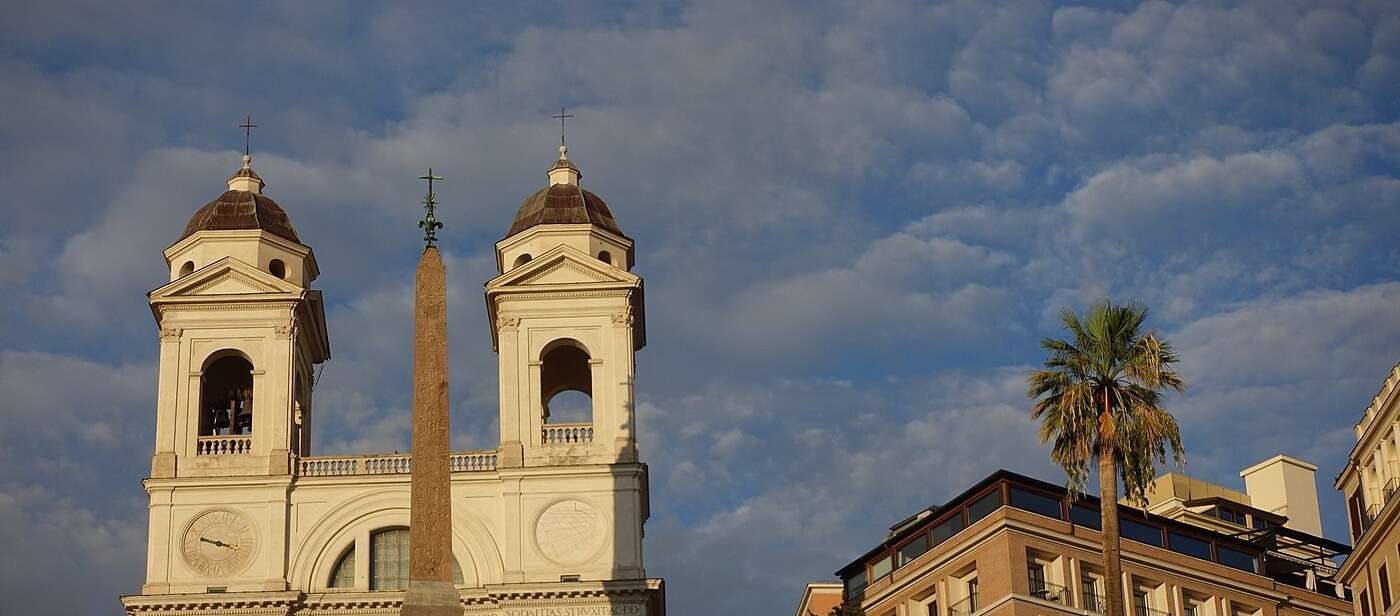
Rome builds on top of itself, and its hotels sit in the layers: a convent by Borromini, a palazzo over a gladiator school, a curve of ancient baths, an opera impresario’s house. This list has the hotel where a disgraced leader was pelted with coins, the one Picasso stayed in, and a rooftop restaurant that faces the Colosseum head-on.
The list is grouped by character, not ranked. Each hotel’s name links to its own site, where the rate is current and you book direct.
The grand old ones
Hassler Roma · Spanish Steps
The Hassler opened in 1893 at the top of the Spanish Steps, started by a Swiss hotel family. It is still independent and family-run; Roberto Wirth, deaf from birth, ran it from 1982 until he died in 2022. Audrey Hepburn and Grace Kelly are among the names in its register.
The St. Regis Rome · Repubblica
César Ritz opened this as Le Grand Hotel in 1894, with Auguste Escoffier running the kitchen for the opening. It was billed as the first hotel in Rome lit throughout by electricity. It marked its 130th year in 2024.
Hotel Eden · Via Veneto
The Eden opened on the Ludovisi hill in 1889. Dorchester Collection bought it in 2013 and reopened it in 2017 after gutting and rebuilding it. In the Dolce Vita years it was a film-world haunt, and Fellini is said to have held court and given interviews at its bar.
Grand Hotel Plaza · Via del Corso
The Plaza has stood on Via del Corso since 1860, one of the oldest grand hotels in the city. The composer Pietro Mascagni lived here for nearly twenty years and died in the hotel in 1945; a salon carries his name. Its belle-époque rooms, under stained-glass ceilings, turn up often as a film set.
Hotel Quirinale · Via Nazionale
The Quirinale sits next to the opera house, the Teatro Costanzi of 1880, now the Teatro dell’Opera. The impresario who built the theatre built the hotel too, and linked the two with a private passage that is still part of its story. It has stood on Via Nazionale since the end of the 19th century.
Artists, scandals and ivy
Hotel de Russie · Piazza del Popolo
The de Russie sits at the foot of the Pincio, its terraced garden laid out by Giuseppe Valadier, who designed Piazza del Popolo next door. Picasso and Cocteau stayed in 1917 while they worked with Diaghilev’s Ballets Russes. For much of the 20th century the building held offices and studios of the state broadcaster RAI, until Rocco Forte reopened it as a hotel in 2000.
Hotel Raphael · Piazza Navona
On the last day of April 1993, the Socialist leader Bettino Craxi, who lived at the Raphael, was pelted with coins by a crowd outside the door — one of the defining images of Italy’s Tangentopoli corruption scandal. The lobby shows the owner’s collections, Picasso ceramics among them. Richard Meier redesigned the top floors.
Hotel Locarno · Piazza del Popolo
The Locarno opened beside Piazza del Popolo in 1925 and has traded on its between-the-wars air ever since. The art deco fittings are largely original, down to the 1920s birdcage lift. Its bar has long been a fixture of the Rome film world.
Residenza Napoleone III · Via del Corso
This is one of the smallest luxury stays in Rome: a single grand frescoed suite, with a roof-terrace apartment above it, inside the 16th-century Palazzo Ruspoli, still owned by the Ruspoli family. It is named for Napoleon III, who as the young Louis Napoléon lived in the palace during his Roman years around 1830.
Hotel d’Inghilterra · Via Bocca di Leone
The d’Inghilterra has taken guests near the Spanish Steps since about 1845; the building had earlier housed visitors of the Torlonia princes across the street. Its guest book runs from Mark Twain and Henry James to Liszt, Mendelssohn, and Hemingway. It reopened in September 2024 after a full renovation.
Palazzi turned hotels
Palazzo Manfredi · Colosseo
Palazzo Manfredi is a 17th-century house built over the Ludus Magnus, the main gladiator training school of ancient Rome, directly across from the Colosseum. One suite looks down onto the excavated ruins of the school. Its rooftop restaurant, with the Colosseum head-on, holds a Michelin star.
Hotel Vilòn · Campo Marzio
The Vilòn opened in 2018 in a 16th-century wing of the Palazzo Borghese. The building had served for centuries as a charity school for girls attached to the family’s palace. Some rooms look over the Borghese private gardens, which the public never sees.
Anantara Palazzo Naiadi Rome · Piazza della Repubblica
The hotel is the curved, colonnaded building on Piazza della Repubblica, and its curve follows the line of the ancient Baths of Diocletian. Remains of the baths survive underneath it. Known for years as the Boscolo Exedra, it became Anantara’s first hotel in Italy in 2019.
Donna Camilla Savelli · Trastevere
The hotel was a convent, begun in 1642 to a design by the baroque master Francesco Borromini for the noblewoman Camilla Savelli. Borromini’s church front was never finished and still shows its bare brick. The cloister gardens and the church are part of the hotel, up on the Gianicolo above Trastevere.
Villa Spalletti Trivelli · Quirinale
Villa Spalletti Trivelli is a private mansion from the early 1900s, facing the gardens of the Quirinal Palace. It opened as a small residence-hotel in the 2000s, keeping the family’s antiques, frescoed rooms, library, and walled garden. It is a member of Italy’s association of historic houses.
The modern arrivals
Rome Cavalieri, A Waldorf Astoria Hotel · Monte Mario
The Cavalieri opened in 1963 on fifteen acres of gardens on top of Monte Mario, looking over the whole city. It holds what it bills as the largest private art collection in any hotel in Europe. The centerpiece is three early-18th-century canvases by Giambattista Tiepolo, hung in the lobby.
Six Senses Rome · Via del Corso
Six Senses opened its first city hotel in Italy in 2023, in the Palazzo Salviati Cesi Mellini near Piazza Venezia. The 18th-century facade, attributed to the late-baroque architect Tommaso De Marchis, was restored as part of the conversion.
Bulgari Hotel Roma · Piazza Augusto Imperatore
The Bulgari opened in 2023 on Piazza Augusto Imperatore, facing the Mausoleum of Augustus. Its building is a 1930s rationalist block from the Fascist-era remaking of the square. It is a homecoming for the jeweller, which was founded in Rome in 1884.
G-Rough · Piazza Navona
G-Rough opened in 2015 in a 17th-century palazzetto a minute from Piazza Navona. Its ten suites are furnished with collectible 20th-century Italian design — Gio Ponti, Ico Parisi — set against bare, unrestored plaster walls. The name joins the founder’s initial to the rough look he left in.
Chapter Roma · Regola
Chapter Roma opened in 2019 in a 19th-century palazzo in the Regola quarter, between Campo de’ Fiori and the river. The South African designer Tristan du Plessis mixed brass and industrial finishes with commissioned street art. It is a member of Design Hotels.
The old-school independents
Bettoja Hotel Mediterraneo · Termini
The Mediterraneo is an Art Deco tower from the late 1930s, among the tallest buildings in central Rome when it went up. The Bettoja family has run it as part of a Roman hotel business that marked 150 years in 2025. Near Termini station, it keeps its original 1930s interiors, murals, and fittings.
Hotel Forum · Fori Imperiali
The Forum stands right beside the Imperial Fora, built around a medieval bell tower that is now part of the hotel. Its roof-garden restaurant looks straight over the Fori Imperiali toward the Colosseum.
Albergo Santa Chiara · Pantheon
The Santa Chiara sits directly behind the Pantheon, run by the same family for around two hundred years. It backs onto Piazza della Minerva, where Bernini’s marble elephant has carried its Egyptian obelisk since 1667.
Boutique Hotel Campo de’ Fiori · Campo de’ Fiori
A small hotel in a restored old building a few steps from the Campo de’ Fiori market. Its draw is a roof terrace with a wide view over the rooftops of the old center.
Albergo del Senato · Pantheon
The del Senato is in a 19th-century palazzo on Piazza della Rotonda, right in front of the Pantheon. Its upper rooms and roof terrace look straight onto the portico and the dome.
Frequently Asked Questions
Are these hotels ranked?
No. The groups sort them by character, and the order within each group carries no meaning.
What made a hotel interesting enough for this list?
A story. Every entry was a palazzo, a convent, an ancient ruin, an opera house’s neighbor, or a family hotel a century or two old. Comfort alone did not qualify a hotel.
Why are there no prices?
Rates change daily and a priced list goes stale in a month. Every hotel name links to its own site, where the rate is current and you book direct.
Which hotel puts me closest to the day trips on this site?
Most day trips from Rome leave by train from Termini. The hotels near the station and along Via Nazionale — the Mediterraneo, the Quirinale — put you closest.
Do the small hotels book out faster than the grand ones?
Usually. The tiniest — Residenza Napoleone III, essentially one suite, and the ten-suite G-Rough — book out first. Reserve those well ahead.